
Strategy
Why Your Preference Demand Letters Are Going Straight to the Trash
We were recently hired by a trustee who needed to prosecute more than 100 preference claims. He had sent out demand letters on his own and received less than a 10% response rate.
That’s not unusual. In our experience, it’s about average for demands sent the conventional way.
That trustee then turned the cases over to BRG. Using our methodology, we received responses to more than 85% of the demands we sent.
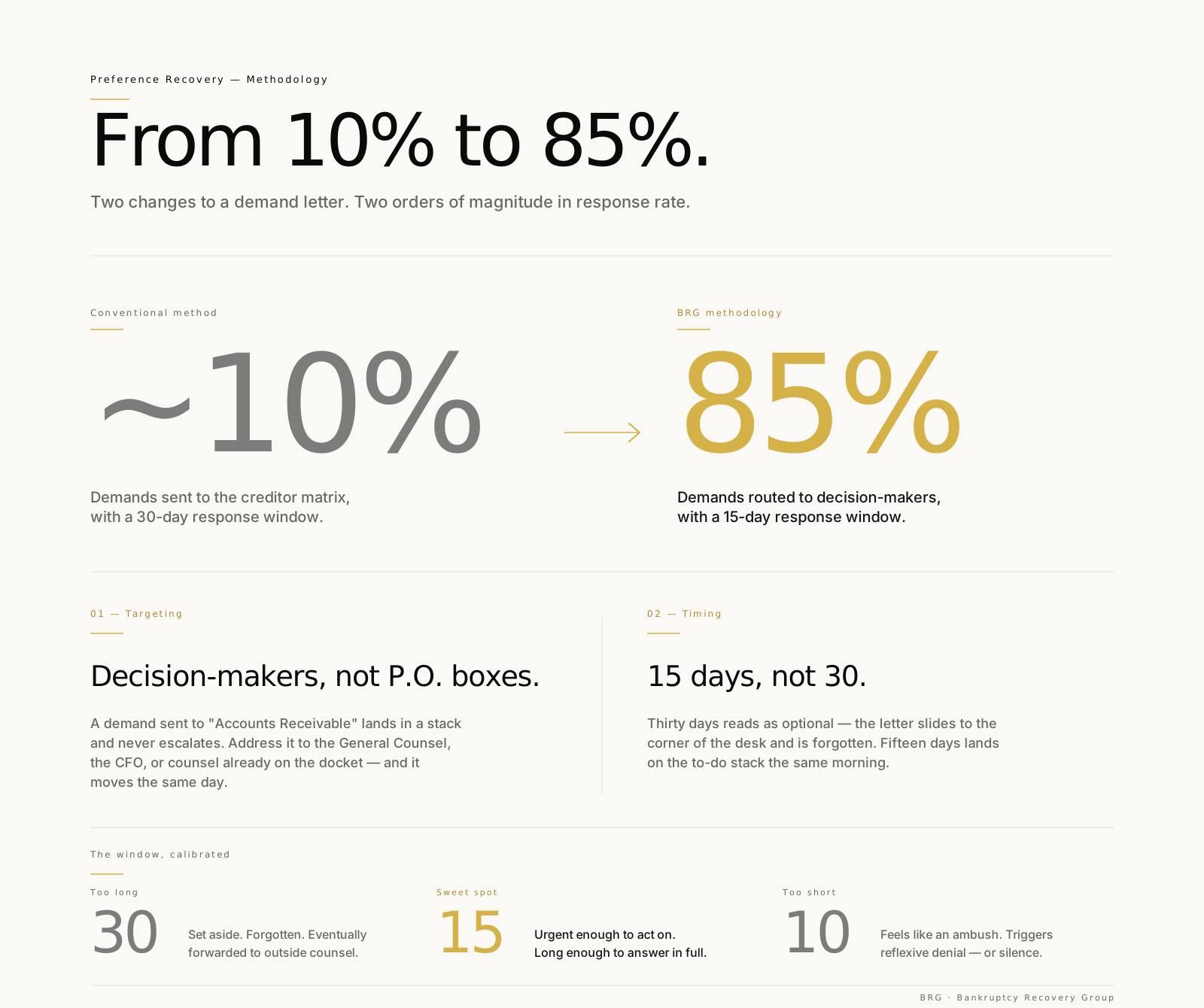
The difference wasn’t the quality of the claims. It wasn’t the size of the demands. It was two things: who we sent the letters to and how much time we gave them to respond.
The targeting problem
Sending demands to the address on the creditor matrix almost guarantees underwhelming results. Those letters land in general inboxes — or worse, nowhere at all. The creditor matrix captures where the debtor was sending payments, not where legal decisions get made.
A demand addressed to “Accounts Receivable, P.O. Box 12345” sits in a stack until someone decides it’s worth escalating. In our experience, that escalation often never happens. The letter gets routed, re-routed, lost in the shuffle, and eventually forgotten.
Without a response, there is no chance of resolving the claim without litigation. And litigation is time-consuming, resource-draining, and sometimes expensive.
The better approach: find the decision-makers
A small amount of upfront research makes a meaningful difference.
Identify officers or decision-makers at the company. Basic internet research can surface the General Counsel, CFO, or other executives. A demand addressed to someone with authority moves faster than one addressed to a department.
Look for in-house counsel or outside bankruptcy counsel listed on the docket. Attorneys and individuals tasked with managing bankruptcy matters for the transferee are often identified on the docket or in filed proofs of claim. If the defendant has appeared in other cases, they’ve already designated someone to handle these matters.
Send the demand to multiple contacts when possible. The more the better. Redundancy increases the odds that someone with authority actually sees it.
Yes, this is more time-consuming than mailing the matrix. But it produces better response rates and reduced costs associated with filing complaints on claims that could have been resolved without litigation.
The timing problem
Here’s what most practitioners don’t realize: the response deadline in your demand letter matters as much as who receives it.
Our process has involved years of A/B testing response windows. We’ve learned that timing isn’t a formality — it’s a lever that directly impacts engagement.
What we found
- 30 days — too long. The letter goes in the corner of the desk. Not urgent. They’ll get to it later. Later becomes never.
- 15 days — the sweet spot. Urgent enough to land on the to-do stack. Enough time for a substantive response with real information.
- 10 days — too short. Recipients feel ambushed. Not enough time to gather facts. Reflexive denial, or silence.
Why this works with C-suite targeting
There’s a compounding effect when you combine proper targeting with the right timeline. When a C-suite officer receives a demand with a 15-day response window, they don’t put it in a pile. They walk down the hall and tell someone to “fix this problem.”
With a 30-day window, that same executive is more likely to forward it to outside counsel — where it enters a black hole of intake procedures, conflict checks, and billing discussions. By the time anyone focuses on it, weeks have passed and the urgency has evaporated.
A tight timeline keeps the matter in-house longer, where decisions actually get made.
The results speak for themselves
In the case we referenced, the trustee’s initial approach — matrix addresses, standard timelines — produced a 10% response rate. Our methodology — targeted recipients, optimized timing — produced an 85% response rate.
That’s not a marginal improvement. That’s the difference between filing complaints on 90% of your claims just to get attention and resolving the majority through pre-litigation engagement.
The downstream benefits are substantial:
- Earlier engagement — cases resolve well ahead of the statute of limitations.
- Lower costs — reduced filing fees and reduced attorneys’ fees.
- Better information — substantive responses help you evaluate defenses accurately.
- More efficient complaint preparation — registered agents are already identified and complaints are already drafted as part of the demand process.
Key takeaways
- Matrix addresses are for claims, not demands. The address where the debtor paid bills is not where legal decisions get made.
- Decision-makers respond; general inboxes don’t. Ten minutes of research can save months of waiting and thousands in litigation costs.
- 30 days is too long; 10 days is too short. A 15-day response window creates urgency without ambush.
- Targeting and timing compound. A C-suite officer with a tight deadline acts immediately. That same officer with 30 days delegates to a black hole.
- Response rate determines total cost. The difference between 10% and 85% isn’t just engagement — it’s how much of the recovery gets consumed by litigation expenses.
It’s not one silver bullet. It’s the combination of doing the targeting work upfront and calibrating the timeline to how people actually behave. We’ve tested it across hundreds of cases. The methodology works.
Want to go deeper? Download our free guide, A Trustee’s Guide to Maximizing Preference Recoveries, for more on demand letters, negotiation tactics, and procedures motions that streamline large preference portfolios.